Showing posts with label china. Show all posts

Sunday, 7 October 2012

Weekly Review - 10.07.2012

 
  • The most important figure of the past week came out on the last day of the week – U.S unemployment numbers.  The jobless rate declined from 8.1 % to 7.8% (12.1M/ (115.6M+27.3M+12.1M) as 114,000 jobs were added.  This definitely boosts Obama’s campaign one month before the election, especially after his poor debate with Romney. Romney on the other hand disputed that the lower unemployment rate is only due to a decrease of the workforce as a result of discouraged workers who stop looking for employment.
  • The markets responded favourably as share prices increased to the positive four year low unemployment data, while safe heaven securities such as Treasury notes tumbled.  Gold retreated by 0.6% to $1,777 an ounce given the positive news.  However gold will most likely remain a top commodity choice as the possibility of a “fiscal cliff” approaches.
  • Another election campaign coming to an end south of the border is that of Hugo Chavez Venezuela’s president and Henrique Capriles Radonski – the opposition candidate who has a lead in the polls. This could  bring a lot of change to Venezuela’s currently nationalized financial institutions and utilities/steel companies.  If Capriles takes office, he will decentralize control and dismantle policies such as currency and price controls while allowing more foreign direct investment to boost the economy.  
  • On the other side of ocean, European markets also rose as the European Central Bank reinforced its willingness to buy Spain’s bonds if it requested aid. Europe’s move to a more unified union be it monetary or fiscal continues as France, Malta, Spain, Italy and Portugal released a joint statement to push the European Council in establishing a single European banking supervision system in which states would jointly back their banks.
  • Europe’s debt crisis has also affected China, a large trade partner with Europe, who is preparing to show weaker earnings in the third quarter.  Technology and materials companies originate a big portion of their revenues from China which could be potentially putting them at disappointing third quarter performance. The Chinese index is trading at its cheapest since 2008 which is attractive for investors while the Republic struggles to reduce the economy’s dependence on exports and boost consumption. China along with the other three emerging markets (the BRICs) have shown signs of a slow down. Last year $5.4 billion investments flowed out of the BRICs.   
  • Goldman Sachs has moved beyond the Big Four. The  latest emerging market acronym is MIST – Mexico, Indonesia, South Korea and Turkey. Mexico’s benchmark IPC Index climbed 11 % this year, compared with a 2.8 % increase in  Brazil's Bovespa. Mexico continues to compete with China for manufacturing as costs are climbing in the Asian nation.  Turkeys ISE National increased 28 % and  Indonesia's Jakarta Index gained 7.4%. Out of the MISTs, Turkey stands out with a 8.5% growth in the economy last year.
Happy Thanksgiving and stay tuned for next week's review!
Hugo Chavez and Henrique Capriles Radonski

Anna Nepravishta
          

Monday, 17 September 2012

Weekly Update - September 17, 2012


What a week it was, big announcements from the fed, geo-political tensions grow, and Apple announces its long anticipated iPhone 5

Want to take a closer look? Let’s go!

Step right up folks; Get your stimulus, this one’s going to be big!

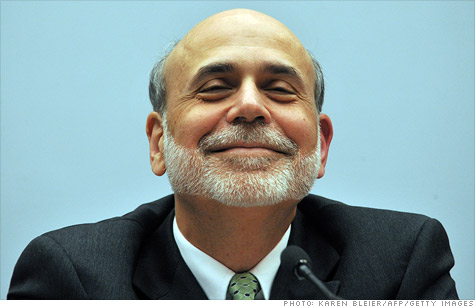
First and foremost the biggest news this week was Federal Reserve Chairman Ben Bernanke’s announcement of another attempt at stimulating the sluggish American economy, QE3 (the 3rd Quantitative Easing):

Like a toddler on Christmas day, markets have been anxiously anticipating the full details of QE3. Here’s what QE3 entails:

Open market purchases of mortgage backed securities at a rate of $40 Billion per month... Indefinitely! (well, to be clear, until the jobs markets improve substantially as long as inflation stays contained)

Here’s a part of the official Fed. statement:

“If the outlook for the labor market does not improve substantially, the committee will continue its purchase of agency mortgage-backed securities, undertake additional asset purchases, and employ its other policy tools as appropriate until such improvement is achieved in a context of price stability,”

The Fed. also hinted at keep rates (which are already near rock bottom) unchanged until at least mid-2015. Pushing back earlier promises to keep rates unchanged till 2014. Yikes...

Market results for the week:

·        US equities gained on the news of QE3
·        The dollar fell broadly
·        Oil prices rose and gold hit a 6-month high

Although, the key metric from QE3 is yet to be determined... INFLATION! For a more in-depth analysis of QE3-inflation risk and how to keep your investments safe & sound, take a look at the below article:


Dispute over Pacific Islands leads to violence and harms Chinese-Japanese Business relationship:

Reuters

Oh my, this does not look good. Asia’s two largest economies are amidst a heated territorial battle over Diaoyu/Senkaku islands which is leading to violent attacks on businesses.

What’s this all about? In a nutshell, Japan claims to have purchased these islands for nearly $30 million dollars, China simply does not recognize this purchase and says Japan is stealing these Islands from them. Now there we’re all caught up to speed, let’s talk about what’s happening to business between the nations which last year generated two-way trade of $345 billion.

·        Both Toyota and Honda have claimed that arsonists have badly damaged plants in China. Honda has halted production in China for two days – other car makers have followed as well in halting production in China including Mazda and partner Ford
·        Seven & I Holdings, is said to close 13 Ito Yokado supermarkets and 198 “7-11” convenience stores in China on Tuesday following the violent attacks
·        Tech giants like Panasonic have halted production facilities in China (following an alleged sabotage by Chinese workers), same goes for Cannon and Sony has discouraged all non-essential travel to China

Let’s hope this issue reaches a conclusion soon and business returns to normal. For now though, keep an eye on Japanese depository receipts traded in China and expect sharp loses.


Is it really here?

Yes it is! The moment many geeks and Apple loyalists have been waiting for has finally arrived. The iPhone 5 is here!

And it’s taller than ever! This is big news for the economy as a whole as the iPhone has some quite astonishing affects on GDP; take a look at what some economists are saying about it:

·        The iPhone 5 could inject $3.2 billion to the U.S. economy in the fourth quarter or $12.8 billion at an annual rate
·        0.33-percentage-point boost to GDP

With pre-orders hitting a record high of 2-million units, Apple could be well on it’s to reaching these estimates and further continuing its super-growth phase

That’s all for this week folks, stay tuned for more

                                                                                         
Matthew MacMull

Monday, 10 September 2012

Could India’s biggest threat to growth be…Itself?


Raghuram Rajan could be the ‘go-to-guy’ to get India out of it’s slower than expected growth-woes


Hey folks! Let’s take a dive into some metrics that have come out of India recently; figures which have many investors scratching their head wondering, ‘what happened to the rapid-growth (and returns) seen only a few years back?’

Let’s get down to the point and expose the elephant in the room: GDP growth. The once jewel of the British Empire’s economy expanded at a rate of only 5.5% in the April-June period. Granted this was higher than the 5.3% GDP growth of the previous three months BUT it cannot even come close to the 9% expansion of early 2011!
"Whilst an upside surprise at 5.5%, the pace of growth is undeniably below potential and validates the need for the government to address sluggishness in investment and external sector activity," said Radhika Rao an economist at Forecast Pte.

So let’s break down what’s holding our mighty elephant back:

        Slowing global demand and uncertainty: What a surprise! (well, not really)… with key economies in trouble (such as Europe and even China) the global macro climate is hurting India in a big way.

  •      India's factory output fell 1.8% in June from a year earlier, the third fall in four months
  •      Foreign direct investment in India fell by 78% in June, from a year earlier

          A growing trade deficit:

  •     Recent figures show that imports outgrew exports by 15.5 Billion dollars
  •       India's trade deficit with China jumped 42% to $40 billion in the last financial year

             An indecisive government in a political deadlock and numerous allegations of corruption has harmed India’s outlook toward foreign investors.

  •          There is becoming a growing concern amongst economists and opposition parties that India’s government  will only pursue reforms which are favorable to its political partners
  •       Analysts are recommending that the government needs to take action to improve the investment climate in order to maintain a high growth rate in the future

            The S&P's has stated it would be more comfortable if the government raised retail petroleum prices and reduced energy subsidies as it has promised, and introduced a goods and services tax (GST)


Let’s talk about the Trade Deficit for a moment…

A 15.5 Billion dollar deficit is no laughing matter, especially given the perceived notion of India being an exporting power house. What’s happening… is this a cause for concern? Or should we be tingling from the excitement of new growth possibilities? Well, if India plays its cards right, the latter may be the correct course of action.

India has significant investment needs; it has issues in its infrastructure – or lack thereof – and needs to import capital goods as a part of where it is in its growth cycle. The result is (no matter how you spin it), India simply needs to import at this phase in the game.

And with a specific note on China; as China advances its production to a more value-added model, India will become more of a manufacturing center than what it is today – so it might sound like a good idea now to recapitalize and invest in infrastructure for the future.


So who will guide India through these uncertain times?

Enter: ‘reformed minded’ and newly appointed Chief Economic Adviser to the Indian Government: Raghuram Rajan (he called the 2008 Financial Crisis in 2005!!)

Could he be the man to save the day in India? As a strong believer in liberalization and privatization, he says “We need to become paranoid again [about growth], as we were in the early 1990s,” And while it might take some work, here’s what he suggests in terms of policy reform as quoted from a recent speech:

1)   Raise fuel prices to international levels in a set of quick steps, and then completely deregulate them. Announce this as soon as politically possible, and do not roll back.

2)   Be kinder to foreign investors – they are not the enemy but a necessity -- we need their money to fund our spending to the tune of 4% of GDP. No doubt, however badly we treat them today, they may eventually want to be in India, but crisis are always about timing. We need them now, when India looks increasingly tattered compared to alternative investment opportunities, not five years from now when growth recovers.

3)   We should bring certainty about taxation to foreign investors, and resist the temptation to levy new retrospective claims.


What in effect Mr. Rajan is trying to do hand India over to the free market again. Reduce government subsidies and appease foreign investors by making India a reliable market to do business in. Can it work? I think so, but there needs to be strong support from the government and a crackdown on corruption for it to happen.

The bottom line:

While recent scares in growth and trade metrics might make you skeptical of India’s future – hold on a moment and think: the trade deficit is there because India needs to invest in capital for production and infrastructure, all which will pay off in the future. Moreover, now with a more free-market inclined chief economic advisor, India will (hopefully) take the correct policy actions to promote a healthy market and ensure foreign investors are kept happy and wanting to come back to India for their business needs.


Matthew MacMull

Friday, 31 August 2012

Will the “Once beloved Dragon” continue to soar?


It has been a joyful and exciting ride for China, exceeding analysts’ expectations on economic growth for the past two decades. In retrospect, China was once considered as one of the least attractive investing regions around the globe mainly because of its rigorously centralized control over all industries and the lack of openness to the global market. However, that has been changed due to China’s tremendous endeavor to undertake constant reforms of economic development plans and absorb so called “Westernization”. 
 

Upon the successful achievement in somewhat decentralized government in the late 1970s, initiating its first economic reform, China was able to shift its concentrated industry from agriculture to manufacturing, taking the advantage of cheap labour to be competitive in the global market. Nonetheless, China’s incomparable competitiveness in the cheap labour has diminished due to the fact that the vast majority of offspring of unskilled parent, working in a factory, have high education and pursue the highly rewarding careers, which causes the increase in wages. Therefore, China has recently faced the challenges by industrialization that increases the cost of economic growth.
 

Furthermore, the cost of industrialization has widened the income gap and weakened the driving force from the reform and opening-up. This indicates that China needs to come up with a better strategy to attack the issues involved in accomplishing the practical fiscal/monetary and foreign policy.

In the case of employing the effective expansionary fiscal policy, focusing on the increase in government expenditures, the central government has to restore its credibility of infrastructure development.


“The bridge – which cost $300 million and was in use for less than a year – was at least the sixth bridge to collapse in little more than a year in China.”

                               
According to The Economist, infrastructure projects are being used as a way of boosting the construction industry. As a result, the government has plans to build 70 new airports and expand another 100 airports by 2015, despite the fact that many existing airports are loss-making.
 

In addition to the challenges with fiscal policy, China has encountered the negative impact from the uncertainty in Europe and therefore decreased interest rates twice already in the first half of the year in response. This initiative has been successful in terms of maintaining low yuan to be competitive in the global market. However, there is a misleading outcome that the exports rose 1 percent year-on-year to $176.9 B in July, but plummeting from the 11.3 percent growth seen in June this year. WSJ has recently come out with some negative reports that the IMF lowered its estimates for China’s economic growth for Q3 due to the deepening Euro crisis and that they expect hard landing taking place in China, which may drive up the price in realty market at a faster rate than the wage increase.

Despite some negative outlook on China’s economic growth, there are a few positive signs. According to Financial Times, China is prepared to attract more foreign direct investments by allowing higher foreign stakes in financial markets and loosening the strict restrictions for foreign speculators to invest in property market. As well, Chinese Premier, Wen Jiabao, assured that the central government and policymakers have collectively put a lot of efforts to meet the targeted economic growth of 7.8 % for Q3 this year by cutting the required reverse ratio and easing inflation that allows more room to adjust monetary policy.

Bottom line:  


We have come to the conclusion that the challenges China is undergoing now are inevitable yet surmountable. The success for China to sustain the economic growth heavily depends on how the central government and policymakers collaborate to develop the new economic stimulus programme that focuses on fiscal policy “if” the economy continues to underperform. At a time when a Rmb4trn (US $586B) spending package to pull the economy out of a slump was introduced in 2009, China successfully managed to 1) establish and strengthen its infrastructure by approving investments undertaken by local governments and state-owned companies, 2) restrain yuan to be competitive by lowering the interest rates with precaution. Now, China is facing new challenges of 1) properly analyzing the potential local investments, 2) effectively and timely responding to the euro crisis, 3) stimulating FDIs in financial securities market.


Young G.