Showing posts with label unemployment. Show all posts

Sunday, 7 October 2012

Weekly Review - 10.07.2012

 
  • The most important figure of the past week came out on the last day of the week – U.S unemployment numbers.  The jobless rate declined from 8.1 % to 7.8% (12.1M/ (115.6M+27.3M+12.1M) as 114,000 jobs were added.  This definitely boosts Obama’s campaign one month before the election, especially after his poor debate with Romney. Romney on the other hand disputed that the lower unemployment rate is only due to a decrease of the workforce as a result of discouraged workers who stop looking for employment.
  • The markets responded favourably as share prices increased to the positive four year low unemployment data, while safe heaven securities such as Treasury notes tumbled.  Gold retreated by 0.6% to $1,777 an ounce given the positive news.  However gold will most likely remain a top commodity choice as the possibility of a “fiscal cliff” approaches.
  • Another election campaign coming to an end south of the border is that of Hugo Chavez Venezuela’s president and Henrique Capriles Radonski – the opposition candidate who has a lead in the polls. This could  bring a lot of change to Venezuela’s currently nationalized financial institutions and utilities/steel companies.  If Capriles takes office, he will decentralize control and dismantle policies such as currency and price controls while allowing more foreign direct investment to boost the economy.  
  • On the other side of ocean, European markets also rose as the European Central Bank reinforced its willingness to buy Spain’s bonds if it requested aid. Europe’s move to a more unified union be it monetary or fiscal continues as France, Malta, Spain, Italy and Portugal released a joint statement to push the European Council in establishing a single European banking supervision system in which states would jointly back their banks.
  • Europe’s debt crisis has also affected China, a large trade partner with Europe, who is preparing to show weaker earnings in the third quarter.  Technology and materials companies originate a big portion of their revenues from China which could be potentially putting them at disappointing third quarter performance. The Chinese index is trading at its cheapest since 2008 which is attractive for investors while the Republic struggles to reduce the economy’s dependence on exports and boost consumption. China along with the other three emerging markets (the BRICs) have shown signs of a slow down. Last year $5.4 billion investments flowed out of the BRICs.   
  • Goldman Sachs has moved beyond the Big Four. The  latest emerging market acronym is MIST – Mexico, Indonesia, South Korea and Turkey. Mexico’s benchmark IPC Index climbed 11 % this year, compared with a 2.8 % increase in  Brazil's Bovespa. Mexico continues to compete with China for manufacturing as costs are climbing in the Asian nation.  Turkeys ISE National increased 28 % and  Indonesia's Jakarta Index gained 7.4%. Out of the MISTs, Turkey stands out with a 8.5% growth in the economy last year.
Happy Thanksgiving and stay tuned for next week's review!
Hugo Chavez and Henrique Capriles Radonski

Anna Nepravishta
          

Monday, 17 September 2012

Weekly Update - September 17, 2012


What a week it was, big announcements from the fed, geo-political tensions grow, and Apple announces its long anticipated iPhone 5

Want to take a closer look? Let’s go!

Step right up folks; Get your stimulus, this one’s going to be big!

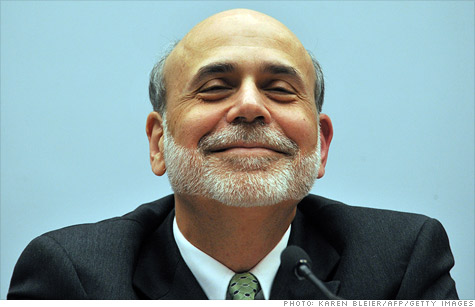
First and foremost the biggest news this week was Federal Reserve Chairman Ben Bernanke’s announcement of another attempt at stimulating the sluggish American economy, QE3 (the 3rd Quantitative Easing):

Like a toddler on Christmas day, markets have been anxiously anticipating the full details of QE3. Here’s what QE3 entails:

Open market purchases of mortgage backed securities at a rate of $40 Billion per month... Indefinitely! (well, to be clear, until the jobs markets improve substantially as long as inflation stays contained)

Here’s a part of the official Fed. statement:

“If the outlook for the labor market does not improve substantially, the committee will continue its purchase of agency mortgage-backed securities, undertake additional asset purchases, and employ its other policy tools as appropriate until such improvement is achieved in a context of price stability,”

The Fed. also hinted at keep rates (which are already near rock bottom) unchanged until at least mid-2015. Pushing back earlier promises to keep rates unchanged till 2014. Yikes...

Market results for the week:

·        US equities gained on the news of QE3
·        The dollar fell broadly
·        Oil prices rose and gold hit a 6-month high

Although, the key metric from QE3 is yet to be determined... INFLATION! For a more in-depth analysis of QE3-inflation risk and how to keep your investments safe & sound, take a look at the below article:


Dispute over Pacific Islands leads to violence and harms Chinese-Japanese Business relationship:

Reuters

Oh my, this does not look good. Asia’s two largest economies are amidst a heated territorial battle over Diaoyu/Senkaku islands which is leading to violent attacks on businesses.

What’s this all about? In a nutshell, Japan claims to have purchased these islands for nearly $30 million dollars, China simply does not recognize this purchase and says Japan is stealing these Islands from them. Now there we’re all caught up to speed, let’s talk about what’s happening to business between the nations which last year generated two-way trade of $345 billion.

·        Both Toyota and Honda have claimed that arsonists have badly damaged plants in China. Honda has halted production in China for two days – other car makers have followed as well in halting production in China including Mazda and partner Ford
·        Seven & I Holdings, is said to close 13 Ito Yokado supermarkets and 198 “7-11” convenience stores in China on Tuesday following the violent attacks
·        Tech giants like Panasonic have halted production facilities in China (following an alleged sabotage by Chinese workers), same goes for Cannon and Sony has discouraged all non-essential travel to China

Let’s hope this issue reaches a conclusion soon and business returns to normal. For now though, keep an eye on Japanese depository receipts traded in China and expect sharp loses.


Is it really here?

Yes it is! The moment many geeks and Apple loyalists have been waiting for has finally arrived. The iPhone 5 is here!

And it’s taller than ever! This is big news for the economy as a whole as the iPhone has some quite astonishing affects on GDP; take a look at what some economists are saying about it:

·        The iPhone 5 could inject $3.2 billion to the U.S. economy in the fourth quarter or $12.8 billion at an annual rate
·        0.33-percentage-point boost to GDP

With pre-orders hitting a record high of 2-million units, Apple could be well on it’s to reaching these estimates and further continuing its super-growth phase

That’s all for this week folks, stay tuned for more

                                                                                         
Matthew MacMull

"Inflation is always and everywhere a monetary phenomenon." - Milton Friedman


Last week Ben Bernanke announced another round of quantitative easing (QE3).  This time around the FED's have planned to buy $40Billion of MBS per month.  That's another $480B per year.  Three rounds of massive stimulus have led many people to become concerned about inflation.  

As quoted by Milton Friedman “Inflation is always and everywhere a monetary phenomenon.”  Just ask Zimbabweans who have stopped publishing their inflation rates; last recorded rate was on 2008 Mid-Nov. of 89,700,000,000,000,000,000,000%.

What is inflation?


Simply put, inflation is a decline in ones purchasing power.  As more money is made readily available to consumers (money supply) and is circulated in the system (velocity) the prices of goods and services start to increase making it costlier for you and me. 


Lets take a look at how much money is currently in the system...


It doesn't get any clearer than this!  The massive spike represents billions of dollars freshly printed off the printing press starting sometime around 2008. 


Where is all this money hiding?
Banks have tremendously expanded their balance sheets in the recent years.  Taking a closer look at money in circulation we can see that banks have been hesitant to loan mortgages and consumers unwilling to apply for loans.  Even with ultra low interest rates, people are not taking on debt.


What does this all mean?

The spark!  So much fuel has been pumped into the system in the form of money that a spark to the economy will ignite the fire and then..... an explosion.  Once the economy gets heated and starts to pick up there will be big surprises in inflation rates.  Key numbers to be aware of are employment, consumer lending and housing starts.  These numbers will be a good indicator of the spark.   The Federal Reserve expects the economy to pick up by 2015. 

Portfolio Hedging Strategies


Protecting your investments is important! From a portfolio standpoint if you were holding a 60/40 equity bond portfolio throughout the highest inflation peaks of WWI, WWII and the 1970’s you would have a negative 10 year return real return on your portfolio.  


How can you deliver equity like returns in times of inflation?
Benjamen Graham the father of financial analysis has stated two plays.

     1. Inflation Protected Bonds   
          2. Real Assets (Gold, Commodity Futures, Natural Resource Stocks, REITS)

Taking a closer look at these assets.  I have provided their sensitivity (Beta) to inflation surprises        
Data - (1970-2011)
Assets
Beta
Gold
11.5
Commodity Futures
7.1
Natural Resource Stocks
3.0
Inflation protected bonds
0.8
Real Estate Investment Trusts
(1.5)

*inflation surprise is the difference between actual and real inflation

Bottom Line:  Protect your wealth! and be ahead of the curve.  A RAPID rise in inflation will surprise many investors.  Consider holding Gold, Commodity Futures, Natural Resource Stocks and Inflation Protected Bonds as these assets have preformed very well in inflationary periods.  


Spot Gold on Feds announcement


Herman Venegas
September.17.2012