Showing posts with label investments. Show all posts

Monday, 17 September 2012

Weekly Update - September 17, 2012


What a week it was, big announcements from the fed, geo-political tensions grow, and Apple announces its long anticipated iPhone 5

Want to take a closer look? Let’s go!

Step right up folks; Get your stimulus, this one’s going to be big!
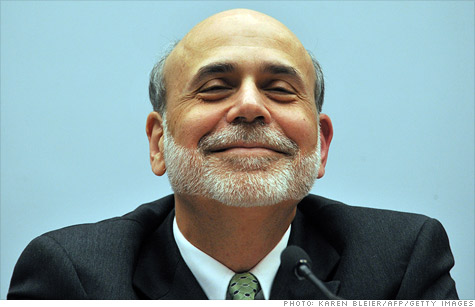
First and foremost the biggest news this week was Federal Reserve Chairman Ben Bernanke’s announcement of another attempt at stimulating the sluggish American economy, QE3 (the 3rd Quantitative Easing):

Like a toddler on Christmas day, markets have been anxiously anticipating the full details of QE3. Here’s what QE3 entails:

Open market purchases of mortgage backed securities at a rate of $40 Billion per month... Indefinitely! (well, to be clear, until the jobs markets improve substantially as long as inflation stays contained)

Here’s a part of the official Fed. statement:

“If the outlook for the labor market does not improve substantially, the committee will continue its purchase of agency mortgage-backed securities, undertake additional asset purchases, and employ its other policy tools as appropriate until such improvement is achieved in a context of price stability,”

The Fed. also hinted at keep rates (which are already near rock bottom) unchanged until at least mid-2015. Pushing back earlier promises to keep rates unchanged till 2014. Yikes...

Market results for the week:

·        US equities gained on the news of QE3
·        The dollar fell broadly
·        Oil prices rose and gold hit a 6-month high

Although, the key metric from QE3 is yet to be determined... INFLATION! For a more in-depth analysis of QE3-inflation risk and how to keep your investments safe & sound, take a look at the below article:


Dispute over Pacific Islands leads to violence and harms Chinese-Japanese Business relationship:

Reuters

Oh my, this does not look good. Asia’s two largest economies are amidst a heated territorial battle over Diaoyu/Senkaku islands which is leading to violent attacks on businesses.

What’s this all about? In a nutshell, Japan claims to have purchased these islands for nearly $30 million dollars, China simply does not recognize this purchase and says Japan is stealing these Islands from them. Now there we’re all caught up to speed, let’s talk about what’s happening to business between the nations which last year generated two-way trade of $345 billion.

·        Both Toyota and Honda have claimed that arsonists have badly damaged plants in China. Honda has halted production in China for two days – other car makers have followed as well in halting production in China including Mazda and partner Ford
·        Seven & I Holdings, is said to close 13 Ito Yokado supermarkets and 198 “7-11” convenience stores in China on Tuesday following the violent attacks
·        Tech giants like Panasonic have halted production facilities in China (following an alleged sabotage by Chinese workers), same goes for Cannon and Sony has discouraged all non-essential travel to China

Let’s hope this issue reaches a conclusion soon and business returns to normal. For now though, keep an eye on Japanese depository receipts traded in China and expect sharp loses.


Is it really here?

Yes it is! The moment many geeks and Apple loyalists have been waiting for has finally arrived. The iPhone 5 is here!

And it’s taller than ever! This is big news for the economy as a whole as the iPhone has some quite astonishing affects on GDP; take a look at what some economists are saying about it:

·        The iPhone 5 could inject $3.2 billion to the U.S. economy in the fourth quarter or $12.8 billion at an annual rate
·        0.33-percentage-point boost to GDP

With pre-orders hitting a record high of 2-million units, Apple could be well on it’s to reaching these estimates and further continuing its super-growth phase

That’s all for this week folks, stay tuned for more

                                                                                         
Matthew MacMull

Tuesday, 28 August 2012

Fiscal Cliff and Superman

The Cliff

What's all this Fiscal Cliff talk? The fiscal cliff is a mix of expiring tax cuts (Bush tax cuts, Alternative Minimum Tax inflation patch and the payroll tax cut) and spending cuts (the “sequestration.” which chops 10 percent from defense and 8 percent from all discretionary spending; Medicare doctor payments; and extended unemployment benefits).  All these cuts are set to expire by year end and are likely to pose a big threat if not resolved.  

Last week the Congressional Budget Office (CBO) stated that the American economy is headed for a full out recession if all tax increases and spending cuts occur.
"The deficit will shrink [by] almost $500 billion ... Such fiscal tightening will lead to economic conditions in 2013 that will probably be considered a recession, with real GDP declining by 0.5 percent between the fourth quarter of 2012 and the fourth quarter of 2013 and the unemployment rate rising to about 9 percent in the second half of calendar year 2013"
Simply put, if Congress doesn't get their act together Americans should expect a loss of "2 million" jobs and a "recession".   That's right folks, a recession.  A loss of $500 billion is equivalent to 4% GDP.  Current GDP is 1.5%.  Therefore, in a 100% scenario (worst case)  we can expect GDP to be -2.5% (1.5%-4%).

Gridlock

I expect Congress to act similarly to last year debt ceiling crisis where republicans and democrats acted like children and after much political brinkmanship and a rating downgrade by Standards and Poor's, Congress finally came to their senses. 
Although a full blown scenario where all tax cuts and spending expire seems very unlikely.  Given Congress's track record it is also unlikely to assume they will extend all tax and spending cuts.  This leaves one to assume that half the cuts will be extended and the fiscal drag on GDP will be about 2%.


Scenario
GDP
No Fiscal Cliff (not likely)
1.5%
Full Fiscal Cliff (not likely)
-2.5%
50% of cliff (most likely)
-0.5%
 

It gets worse! ...... The clifflet

Here's the real threat. Even if the Bush tax cuts are extended and the sequester delayed, a huge amount of fiscal drag remains in place. They include the expiration of the payroll tax cut, the expiration of extended unemployment insurance benefits and an imposition of a new 3.8% Medicare investment tax on the wealthy.  The IMF reckons fiscal policy will tighten more in America next year than in Spain, Italy or Portugal. Though smaller than the full fiscal cliff, the fiscal clifflet still poses a significant headwind to the economy.

Bernanke to the Rescue!

Paying close attention to the minutes released by the Feds and reading between the lines, one can see  there's a very high probability that we see some sort of quantitative easing come Sept 12.   According to PIMCO's Bill Gross QE3 is 80% probable. 
Passages from the minutes: 

Many members judged that additional monetary accommodation would likely be warranted fairly soon unless incoming information pointed to a substantial and sustainable strengthening in the pace of the economic recovery.
The data has been improving slightly, but nothing impressive and sustainable to withstand a large fiscal drag.  Expect the Feds to keep interest rate depressed throughout 2014 and inject liquidity through some sort of Treasury/MBS purchase program.

As a Canadian, why should you be concerned about Fiscal Cliff?
Contact us to learn how you can hedge your portfolio and profit for what's about to come.


      Herman Venegas


Friday, 27 July 2012

Weekly Review

Gloom and Doom

Certainly this has not been a fun week for most markets around the world.  Many companies came out missing target estimates reaffirming the fact that the economy is far away from a real recovery. The UK shocked the markets when the latest GDP numbers from the Office for National Statistics showed that the economy shrank by 0.7% over the second quarter. 

USA
The US economy expanded at a rate of 1.9% the first quarter.  Numbers just came out today indicating that the economy grew at a slower pace of 1.5% for the second quarter from April to June.  The economy slowed amid weak consumer spending, government cuts and a rise in imports from foreign countries.  Weak confidence in the Euro currency has led to capital flight into the American dollar thereby pushing up its value.  With a stronger US dollar exports have become less attractive which in turn is hurting local manufacturers export their products.
Bush tax cuts are set to expire be the end of 2012 (Fiscal Cliff).  Most economist predict that if all of the 2012 tax and spending cut measures occur under current law, it would reduce the deficit but also drag down GDP by 4% or more and cause a recession next year.

EU

European Central Bank President Mario Draghi pledged on Thursday to do whatever was necessary to protect the euro zone from collapse, sending a strong signal that inflated Spanish and Italian borrowing costs were in his sights.  Spain's 10-year bond yield sank to as low as 6.92%, around 40 basis points lower.  Furthermore, the news reversed the 5 day decline of the Euro/USD.  The Euro made significant gains.


Italy also came into the spotlight as the provincial government association (UPI) warned that schools may not be able to open after the summer holidays due to planned spending cuts and local finances. These comments proceeded prime minister Mario Monti's comments last week announcing that Sicily was on the brink of default and on the same day the press stated that 10 Italian cities faced serious financial difficulties.
  
Citigroup said there’s now a 90 percent chance Greece will leave the euro in the next 12 months to 18 months.


China

China National Offshore Oil Corp.(CNOOC) — is a state-owned oil company.
Calgary-based oil and gas firm Nexen Inc. has agreed to be acquired by CNOOC Oil Company in a $15.1 billion US cash deal. It will pay $27.50 per Nexen share. That price makes the deal the largest foreign transaction that Beijing has ever attempted.

The New York senator, a noted opponent of China's international trade policies, told U.S. Treasury Secretary Timothy Geithner that the U.S. should block the takeover of Calgary-based Nexen unless China lives up to its free trade commitment.

With stronger Canadian/Chinese trade relations and uncertainty in middle eastern oil we can expect to see more M&A activity in the Canadian energy markets.


Herman Venegas


Tuesday, 17 July 2012

Will California go Bankrupt?

David McNew/Getty Images

 
Once again, California, the home of Hollywood and entertainment has filed for Bankruptcy for the third time in a month. Is this a rare occurrence or do we expect to see more of this coming our way?
Let’s investigate!

Stockton, CA

Population: 291,707
Median household income: $45,730

Prior to the housing collapse of 2008 this city was Booming.  The city had spent over $190Million on a new Harbour, City Hall, Stadium and Parking Garages. In early 2007 average home sales totaled 7,000 on a quarterly basis with a median price of $340,000 per unit. Unemployment was low with the majority of employment in the construction industry and public works.  

What happened after 2008?

Quarterly average home sales dropped by 1,500 and the same house that was selling at $340,000 is now  selling at $110,000 (68% drop in value…ouch!).  In addition, with less houses being built, the construction industry took a big hit.  Unemployment is now at its highest, 20.1% which is 10% above the California State average.  Furthermore, as Stockton panicked to pay its debt, it almost cut public wages by 43%, police force and fire by 25% and 30%.  Anyone paying close attention to this city could see this coming a mile away!  The city had no other options.  It has a looming pension obligation and health benefits totaling $400Million.   
20% of the city unemployed combined with a 68% drop in housing value, filing for bankruptcy was the only option left.  

Mammoth Lakes, CA

Population: 7,392
Median Household Income: $51,929

Mammoth Lakes, California is a small resort town up in the Sierra Nevada Mountains.  Its largest creditor, "Mammoth Lakes Land Acquisition" has been involved in an ongoing court case battle since 2006.  Unfortunately, the city lost the case (breach of contract) and was forced to make full payment of $43 million by June 30, 2012.  This city has an annual operating budget of only $2.8Million which makes it feasibly impossible to pay off "Mammoth Lakes Land Acquisition" unless each citizen was willing to cough up an additional $6,000 in taxes. 


San Bernardino, CA

Population: 209,924
Median household income: 35,978

This city was also hit hard by the 2008 housing turmoil. It displayed a high degree of foreclosures and a rapid decline in the housing market.  Since 2007, home prices have declined from $300,000 to $100,000.   In addition, unemployment rose to 16.% with the majority of labour employed in construction. 
 
The city calculates that public safety spending now accounts for 73% of the general fund budget.  Also, the city imposed a 10% pay cut to public workers but the firefighter union successfully revoked it.  In addition to failed negotiation attempts with union, its pension cost are soaring and have  doubled since 2006.  Pensions are set to reach $25Million.   
With little cash on hand (approximately $120Million for this fiscal year) San Bernardino was not able to meet its contractual agreements and filed.   


Stockton and San Bernardino both displayed the following symptom

      Excessive public spending
Rapid foreclosure rates with the largest share of employees in the construction industry
Unemployment above 15% (well above the national average of 8.2%)
        Strong Unions with high pension cost

It’s clear to see these two states have a high degree of sensitivity to the housing sector.  Most economists like to call this “elasticity” With the average price of a house costing approximately $300,000, the municipal government was able to generate a substantial amount of revenue off property taxes.  Furthermore, the majority of labour was in the construction industry causing a surge in unemployment which ultimately had spillovers into other areas. 

To answer the question "do we expect to see more of this coming our way?"
Municipalities that exhibit the above symptoms are at risk of bankruptcy.  Areas which were hardest hit by the housing market and have yet to recover (home prices are still falling in most cities) are areas to look out for.  One piece of advice, stay away from municipal bonds if they display these symptoms. 


Herman Venegas